
How Is a Katana Made?
The Ancient Craft Behind a Legendary Blade
A katana isn’t just a sword—it’s a symbol of discipline, balance, and centuries of craftsmanship. Behind every blade lies fire, precision, and tradition. But how is a katana truly forged? Let’s dive into the fascinating process that gives birth to one of the most iconic weapons in history.
1. Choosing the Steel: The Katana’s Core
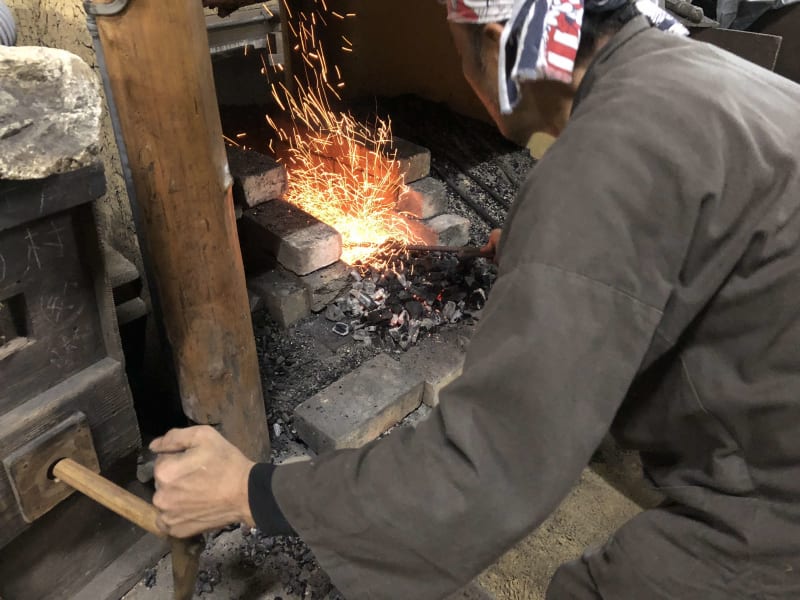
Every great katana starts with the right steel. Traditionally, Japanese swordsmiths used Tamahagane, a high-carbon steel smelted from iron sand called Satetsu, processed in a clay furnace called Tatara over several days. The result? A dense, uneven steel that needed refinement.
Modern katanas typically use:
-
Carbon steels (1045, 1060, 1095),
-
T10 steel, hardened with tungsten,
-
Damascus steel, known for its layered patterns.
👉 The goal is to balance hardness for cutting and flexibility for shock absorption.
2. Forging the Blade: Where It All Begins
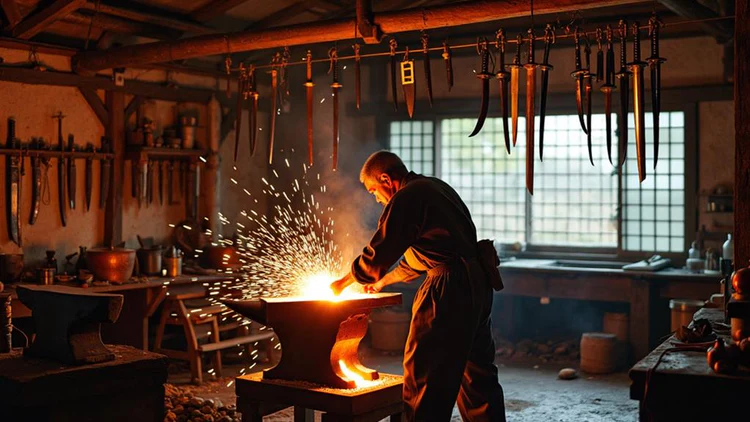
The steel is heated and hammered to shape it—and to purify it.
There are several forging techniques:
-
Mono-steel (Maru): a blade forged from a single type of steel—simple and solid.
-
Composite forging: combines soft core steel and hard edge steel for both strength and flexibility (e.g., Kobuse, Honsanmai).
-
Folded forging (Damascus-style): the steel is folded many times to create a layered structure and unique wave-like patterns.
Each strike of the hammer is a step closer to the blade’s soul.
3. Heat Treatment: Birth of the Hamon
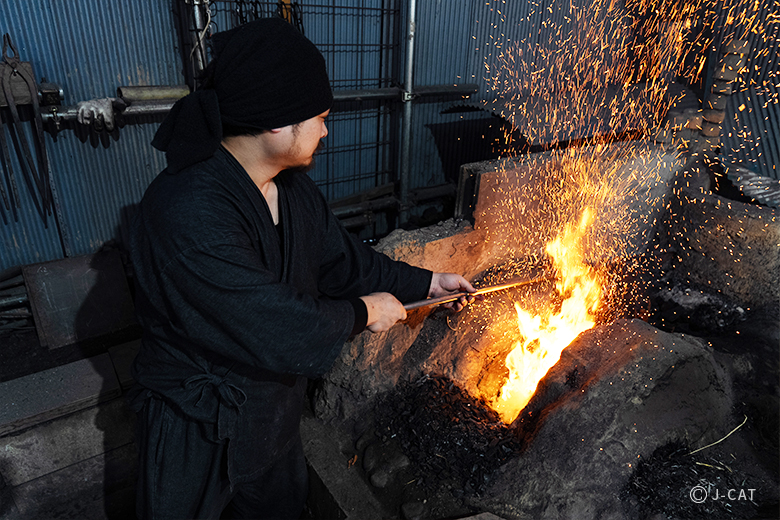
This is a critical phase: differential hardening.
The smith applies a layer of clay to parts of the blade before heating and quenching it in water. The exposed edge cools rapidly and becomes very hard, while the clay-covered spine cools slowly and remains tough and flexible.
This contrast produces the famous hamon (刃文)—a visible temper line that reflects the steel’s dual nature.
4. Polishing: Revealing the Blade’s Soul
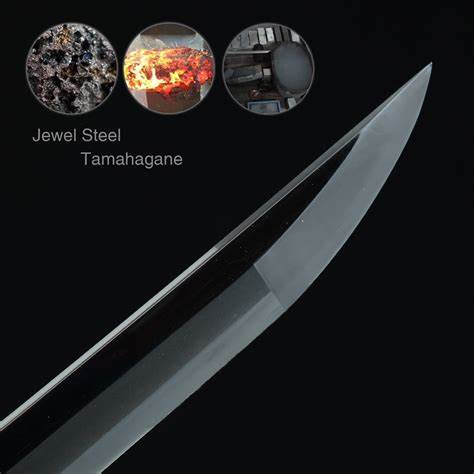
After hardening, the blade is still raw—dark, rough, and unfinished.
Enter the polisher. Using natural stones and precise technique, they spend hours or days refining the blade:
-
Sharpening it to a razor’s edge,
-
Bringing out the hamon,
-
Creating a mirror or satin finish.
A proper polish isn’t just aesthetic—it enhances both performance and legacy.
5. Mounting the Blade: More Than Just a Handle
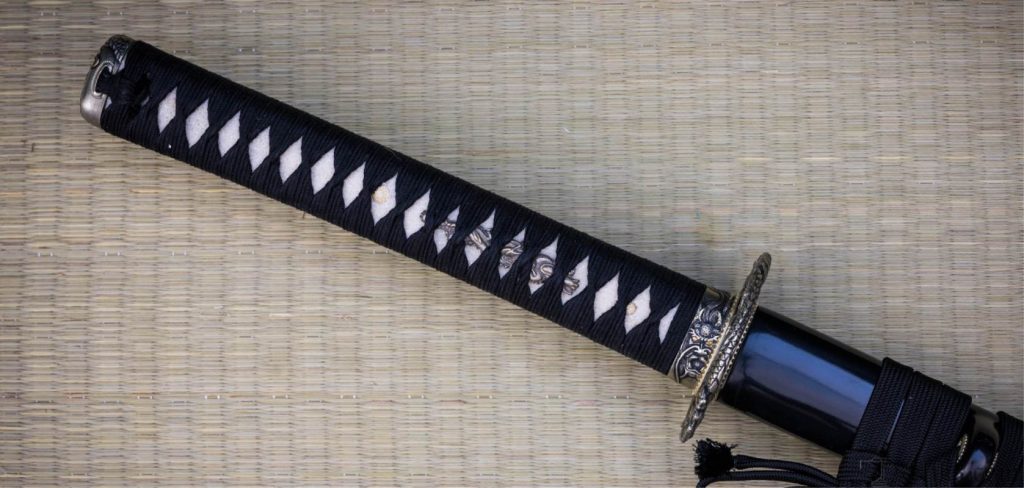
Once polished, the blade is carefully mounted with traditional components:
-
Tsuka (handle): usually made of wood, wrapped in ray skin and hand-woven cord,
-
Tsuba (guard): protects the hand and adds visual identity,
-
Saya (scabbard): lacquered wood, often handcrafted and matched to the blade.
Each part is built to fit perfectly, ensuring the sword is balanced, secure, and visually striking.
6. Tradition Meets Modern Precision
While traditional Japanese swordsmiths still produce handmade katanas using ancestral techniques, modern smiths around the world also craft high-quality blades using:
-
T10 steel for strength,
-
1095 carbon for hardness,
-
Damascus steel for aesthetics and complexity.
👉 Whether for cutting, martial arts, or collection, a katana remains a delicate balance of science and art.
In Summary
Forging a katana is far more than shaping metal. It’s about:
-
Choosing the right steel—just like choosing a soul,
-
Mastering fire and timing to avoid flaws,
-
Spending countless hours revealing what lies within.
And that’s why the katana continues to fascinate. Because it represents discipline, beauty, and inner strength.